← services

Custom AI systems.
Software that does the work.

Work directly with Ed on AI systems, web applications and automation. Based in Riga, available for remote projects and collaboration.

The job someone does by hand every week becomes a system: a defined input, rules in code, a refusal path for what it can't decide, and a record you can read afterwards. The panel beside this is one, small, running in your browser.

Start a project Book a 15-min intro call

weekly orders → one sheetfinished
  • a customer is named
  • the amount is a number
  • the date exists
  • not already in

In 8 orders from 3 places, as they arrive

source,ref,customer,amount,date

  1. shop,#1041,Birch & Co,240.00,2026-09-28out
  2. email,#1042,Linde Studio,95.50,2026-09-28out
  3. phone,#1043,,180.00,2026-09-29to a human
  4. email,#1041,Birch & Co,240.00,2026-09-28held
  5. shop,#1044,Harbour Print,"1,120.00",2026-09-30out
  6. email,#1045,Amber Lane,about 300,2026-09-30to a human
  7. shop,#1046,Sala Bakery,62.40,2026-09-31to a human
  8. phone,#1047,North Dock,410.00,2026-10-01out

Out into the weekly sheet 4

  1. #1041Birch & Co240.00shop · 2026-09-28
  2. #1042Linde Studio95.50email · 2026-09-28
  3. #1044Harbour Print1,120.00shop · 2026-09-30
  4. #1047North Dock410.00phone · 2026-10-01

Needs a human with the reason 3

  1. #1043180.00phone · 2026-09-29no customer named
  2. #1045Amber Laneabout 300email · 2026-09-30the amount isn't a number
  3. #1046Sala Bakery62.40shop · 2026-09-31there is no 31 September

Held already in 1

  1. #1041Birch & Co240.00email · 2026-09-28already in from shop

Record new lines only, nothing rewritten

  1. run 1 · 8 in · 4 out · 3 to a human · 1 held
Sample orders, made up for this page. The rules, the routing and the record are real code running in your browser; nothing is sent anywhere.

A custom AI system starts with the job it needs to do: connect information, call the right tools, handle failures and leave a record you can inspect. The same applies to a web app or an internal tool.

We agree on the scope, the checks and the price before the build. I design, implement and test the software, then hand over the code and the instructions to run it. You can follow the work in my AI workflow case study and project portfolio.

// what gets built

Three shapes of work.

Narrow on purpose. If what you need is outside this, I will say so and point you at whose job it is.

  1. quoted on call

    Systems that run on their own

    The repetitive work your team does by hand every week, removed. Automation, scheduled jobs, data from several sources brought into one store. Every run ends in a written outcome, including the refused ones, and backups are restored on a copy before they're trusted.

    It usually starts with a look at where the hours actually go, which occasionally ends with me telling you the software is not the answer.

  2. quoted on call

    AI automation you can rely on

    Task-specific AI tools, agent workflows and model integrations connected to your software. Code makes the decisions; the model only puts results into words, and the system checks those words against your data before they go out, so nobody on your side has to.

    Tested with planted fakes and hidden checks before it ships. Why “done” is a claim.

    Sensitive data? The model and the automation can run entirely on your own machine or server, so client, medical, legal or financial records never leave it. Private AI.

  3. quoted on call

    A product build

    Accounts, permissions, payments, documents: the parts where getting it wrong is expensive rather than embarrassing. Built so each customer's data is kept apart at the database, not only in the interface, and proven by tests.

    Architecture through to the deploy. One person carrying it means nothing falls between roles, because there are no roles.

Each is scoped on the free call. Yours is one fixed number for your scope and timeline, agreed before anything starts. All the offers

// the honest comparison

What you are choosing between.

Not a pitch that every alternative is bad. A description of the trade you are making.

A development agency

  1. You
  2. Account manager
  3. Project manager
  4. Developer

your question passes two people on the way, and two on the way back

Here

  1. You
  2. Ed, who builds it

you ask the person who builds it

Illustration of the fourth row below: who you chase when you have a question.
The questionA development agencyHere
Who builds it? A team assembled after signing, often more junior than the people who sold it. the person you spoke to, directing AI that writes the code
What do you own? A framework, a build pipeline and a dependency list somebody has to keep current. plain code, no lock-in
How is it priced? Day rates. The estimate grows with the discovery, and discovery is billable. one fixed number
Who do you chase? An account manager, who relays your question to someone else and the answer back. nobody to relay
And the catch? Capacity. An agency can put five people on it; a bus factor of one is a real risk. one person, one queue

The last row is the honest one. If your project genuinely needs five people in parallel, or a support rota, an agency is the right answer and I will tell you that on the call rather than after the contract.

What I turn down: anything needing round-the-clock cover or a formal SLA, staff augmentation where you want a body inside your team for six months, work that is mostly meetings, and rescue jobs on large codebases where nobody can tell me what the software is supposed to do. Those are real needs. They are not this. Small apps built with AI tools are a different job: that is the app check.

// proof

Software I built and shipped myself.

Read this before the numbers. Everything in this section is my own product, built and funded by me on my own infrastructure — nobody commissioned it and nobody paid for it. It is here because it is the only honest way to show you what I can carry alone, at full size, with the awkward parts left in.

The client work on this site is Devgenome and CityRoamer, and both are web builds rather than software engagements. I would rather you knew that from the first line of this section than worked it out from the badges.

556isolation assertions passed, 21 Jul 2026
355audit findings, then twelve fix passes
The private system rendered as a machine: feeds on the left run into one store, then rule gates and a row of workers PRIVATE SYSTEM

Many moving parts. One clock.

A private system where every scheduled job ends in a written outcome, including the refused ones.

  • Automation
  • Scheduling
  • Data
  • AI

Rules decided in code · language models only put results into words · shown part for part, with the names taken off
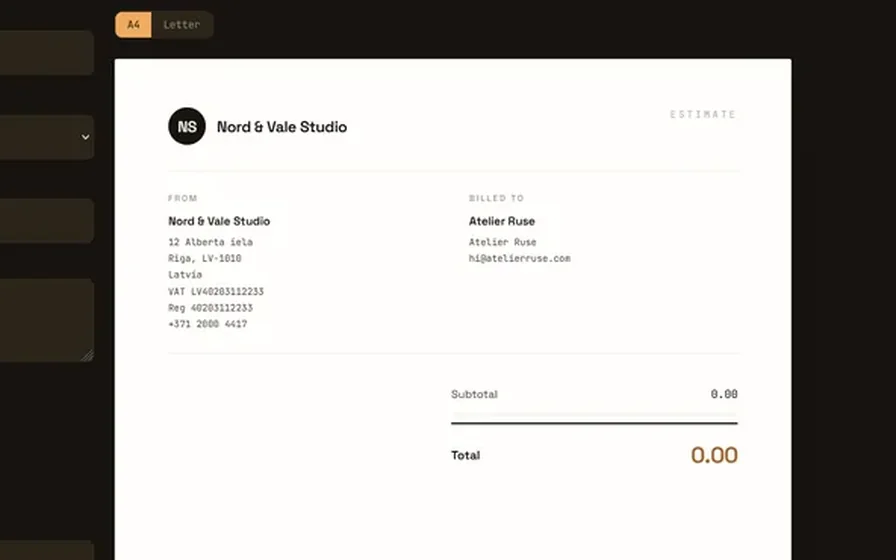
The iziwerk document builder: an estimate rendered as a white A4 document, with a Download PDF button OWN PRODUCT ARCHIVED

iziwerk — the product

A multi-tenant SaaS where tenant isolation is proven, not promised.

  • SvelteKit
  • Supabase
  • Stripe
  • RLS security

Confidentiality enforced at the database · audited against itself after launch, then a twelve-pass fix program

Parallel agent terminals across two monitors, each pinned to its own slice of the codebase OWN TOOLING

The pipeline behind ChampChase

A build system that let one person take a full game to public beta in 15 weeks.

  • Automation
  • Orchestration
  • Verification

6 parallel sessions, file-locked · a pass ends in a verdict, not a vibe · roughly €800 in tooling

The game it built, ChampChase, is in public open beta.

// the method

Directed, not vibe-coded.

The fair question to ask anyone who ships this much on their own.

Every architectural call is mine, and so is every decision to reject one. I run an orchestrated build pipeline against those calls and sit in the middle red-teaming the plans. Automated checks and separate AI reviewers then try to break the result, and the final call on it is mine. The judgment and the refusal are the scarce parts.

Which raises the obvious objection: why hire me rather than the same tools? Because this is what those tools produce with nothing checking them — a privilege column that looks completely plausible and is writable from the browser; a payment status that flips on a redirect instead of a verified webhook; a storage rule that holds in the interface and not against a direct API call. Each one reads fine in review and fails the moment somebody hostile looks at it.

the short version, on about

the long version, with the receipts

// working together

Where I work, and how.

Riga-based and remote. Riga runs two hours ahead of London and one ahead of Amsterdam, Berlin and Zurich, so the working day overlaps in full either way — you are not waiting overnight for an answer.

  • Remote, worldwide, in English. Video calls, written decisions, and a reply within one business day.
  • Fixed scope, one number. Agreed before anything starts. No hourly meter and no invoice that grows while you watch.
  • You see it as it is built. Real software you can click, not status meetings and a demo at the end.
  • It ships with a handover walkthrough. What was built, what changed and why, and the exact path to live.

Tell me what the software has to do. I will tell you whether it is a job for one person.

Software, automation and AI are scoped and priced on what each job actually needs. We talk it through on a free 15-minute call, and you get one fixed number before anything begins. See the offers

One person can quote a fixed price on scope that normally needs a team because the work runs through a system I built for it. That system needs me in the middle of it, which is why it sets the price rather than being the thing you buy.

Start a project Book a 15-min intro call

Also on offer: website redesign · working with London firms